By Safen Roy
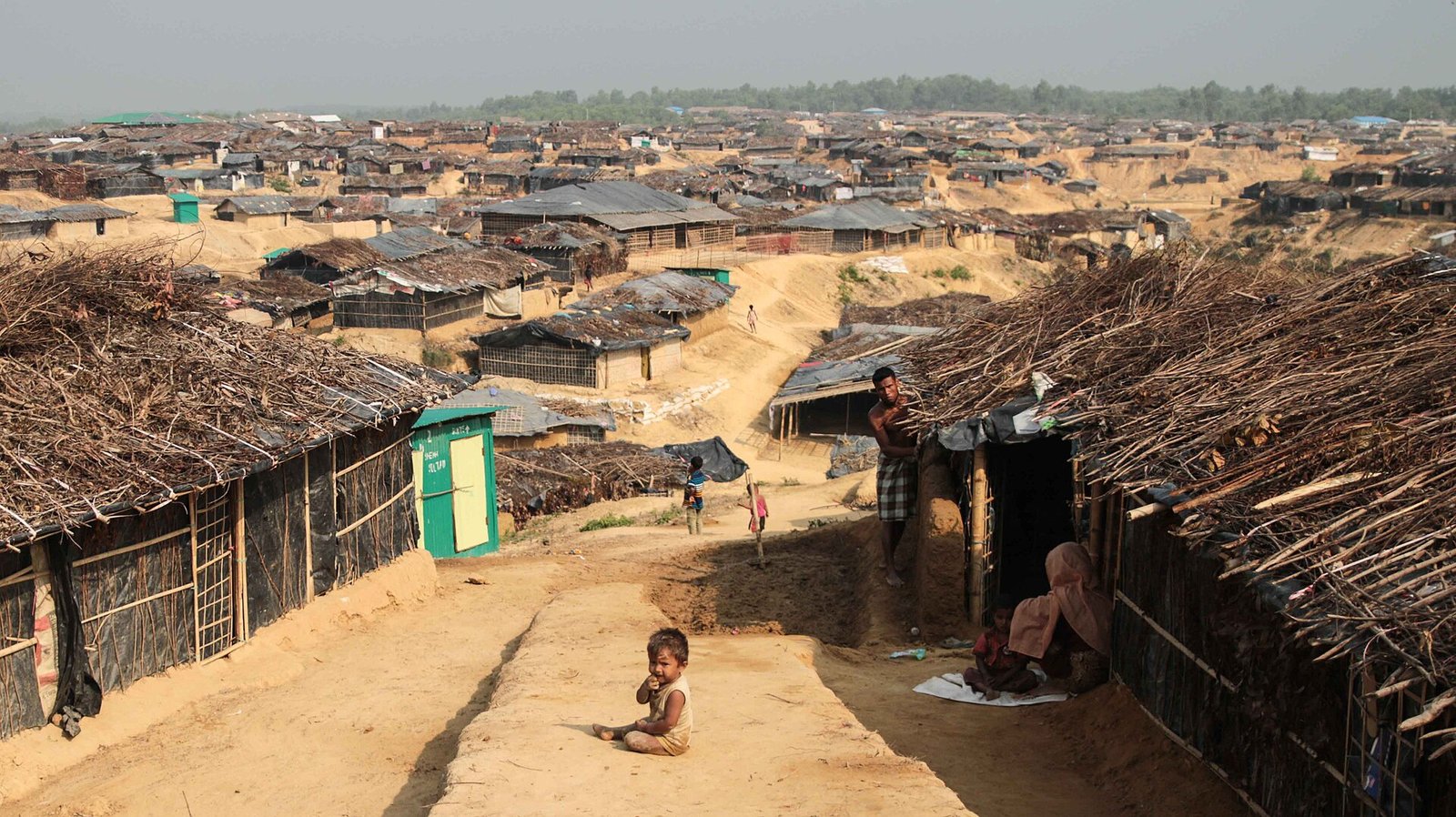
Nine years have passed since August 25, 2017, when hundreds of thousands of Rohingya crossed the Naf River to escape violence in Myanmar’s Rakhine State. What was once considered an emergency has become a long-term reality. Cox’s Bazar and Teknaf continue to bear the responsibility of hosting the displaced, while the situation across the border makes any immediate return impossible. The crisis has entered its tenth year, and 2026 has added announcements to the record without adding a single documented, voluntary return.
The year’s most concrete figure is a financial one. On May 20, the United Nations and its partners sought US$710.5 million for up to 1.56 million refugees and host-community members. The previous plan, launched in March 2025, had asked for US$934.5 million to assist 1.48 million people. The 2026 update was narrowed to essential, lifesaving support. That figure is the amount requested, not the amount received. The direction is nonetheless clear: more people are counted, and less is being asked for on their behalf.
The memory of March 2025 explains why that matters. That month the World Food Programme warned that monthly food support could fall from US$12.50 to US$6 per person, and only US$73 million in new American support averted the immediate reduction. The episode showed how quickly life in the camps can be reshaped by a funding decision taken elsewhere. A response plan limited to essentials leaves little room for the next such shock.
Diplomatically, the second half of the year was busier than the first. On September 16, Malaysia’s prime minister said he planned to host Myanmar’s military leader to discuss Rohingya return. A first group of nearly 1,500 Myanmar nationals was scheduled to leave Malaysia, and Myanmar was reported to have separately agreed to receive 5,000 Rohingya. On September 23, a high-level side event at the UN General Assembly addressed durable solutions, justice and accountability. On October 11, Bangladesh’s home minister called for cooperation involving China, ASEAN, the UN and Japan to support safe, voluntary and sustainable return.
Only one of these produced a movement of people. On September 29, according to Bernama, 1,476 Myanmar detainees were sent from Malaysia aboard Myanmar naval vessels. Reuters reported that their ethnicity was not disclosed, so whether any Rohingya were among them remains unconfirmed. Médecins Sans Frontières warned against unsafe returns. The transfer changed the record from a scheduled operation to a completed one. It did not establish that safe, voluntary Rohingya repatriation had begun.
The distinction between an announcement and an outcome has defined this crisis from the start. In April 2025, Myanmar officials informed Bangladesh that 180,000 Rohingya had been “cleared” for return from a list of around 800,000 names submitted since 2018. No organized repatriation followed. Earlier pilot efforts in 2018 and 2019 collapsed when refugees refused to go back without guarantees of citizenship or reliable security. Holding a discussion is not evidence that conditions for return have changed, and the events of 2026 fit the same pattern.
Conditions in Rakhine explain why. By mid-2025 the Arakan Army controlled more than ninety percent of the state’s territory and held authority in fourteen of its seventeen townships. With the region largely outside the control of Myanmar’s central administration, there is no operational or political base from which large-scale, safe repatriation could take place. For Dhaka, pushing for return under such conditions would be symbolic rather than practical. For the refugees, going back to a militarized Rakhine without citizenship rights would amount to relocation, not repatriation.
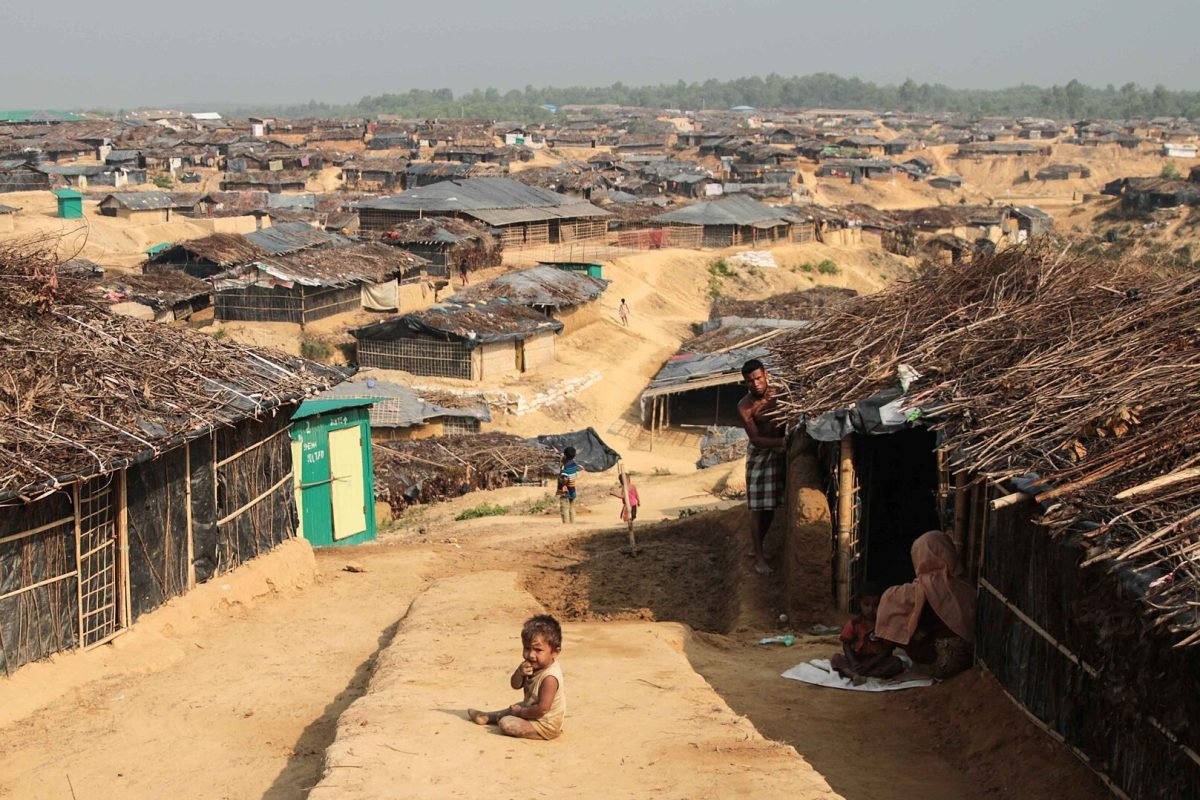
The evidence still points in a single direction: the Rohingya are likely to remain in Bangladesh for the foreseeable future. Geography, demography, and—most of all—time have already set that course. More than half of the Rohingya population in Cox’s Bazar is under eighteen; children born in the camps have no memory of Rakhine and speak Bangla alongside their native dialect. Informal work, linguistic proximity, and religious similarity have produced a subtle overlap with local communities. Integration, whether formally acknowledged or not, is already taking shape—not as a policy, but as a daily practice.
The events of 2017 were not the beginning of this story. They were the largest wave in a cycle that has repeated since 1978, each one deeper than the last. What changed was the scale, not the pattern. What has changed since is the duration.
Bangladesh’s approach—regardless of government changes—has therefore remained one of management rather than transition: maintaining camp stability, ensuring security, and absorbing the long-term costs. International partners continue to finance humanitarian services, at a reduced scale, and continue to describe the crisis as “protracted.” The term has become diplomatic shorthand for permanence.
As Bangladesh moves through its tenth year of hosting, the Rohingya issue is no longer defined by movement but by endurance. The questions that mattered in 2017—when they will return, how many will go—have given way to quieter ones: how long services can be maintained on a shrinking appeal, how host communities can adapt, and how a generation raised in the camps will define itself. A year of proposals, side events and one unverified transfer has not altered those questions. It has only made them a year older.
It may no longer be meaningful to describe the Rohingya as temporary residents of Bangladesh. The camps at Cox’s Bazar are no longer just a response to crisis; they have become part of the country’s social and geographic landscape—a reminder that some crises do not end. They simply stay.